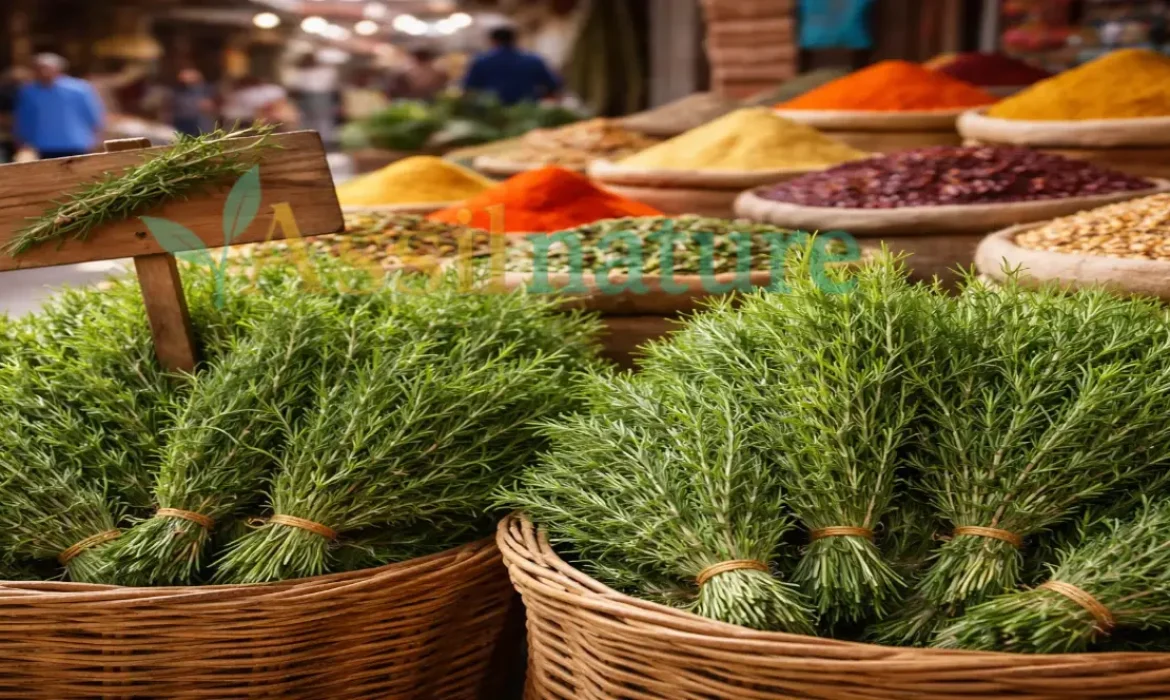
Rosemary from Morocco: Market Demand & Quality

Rosemary from Morocco is increasingly recognized in international markets for its consistent quality and broad commercial relevance. As global demand for aromatic herbs continues to expand, Moroccan rosemary has secured a strong position across food, botanical, and industrial supply chains.
As interest in Moroccan rosemary export continues to grow, buyers increasingly focus on quality consistency and export readiness. Buyers sourcing rosemary today focus not only on origin, but also on processing standards, supply reliability, and export readiness. These factors influence purchasing decisions for bulk trade and long-term procurement.
This article examines market demand for Moroccan rosemary, highlights key quality characteristics, and explains why it remains a competitive export herb in global markets.
Why Moroccan Rosemary Is in Global Demand
Moroccan rosemary benefits from growing conditions that support aromatic consistency and stable supply volumes. Its adaptability to different applications makes it a practical ingredient for international buyers.
From a commercial perspective, rosemary from Morocco is valued for its availability in bulk quantities and its ability to meet standardized quality expectations across multiple markets.
As demand increases for natural and plant-based ingredients, Moroccan rosemary continues to attract interest from buyers seeking dependable sourcing options.
Quality Characteristics of Moroccan Rosemary
The quality of Moroccan rosemary is shaped by a combination of growing conditions, harvesting practices, and post-harvest processing. These factors influence aroma, appearance, and overall stability, which are key evaluation points for international buyers.
Rather than relying on origin alone, importers assess rosemary based on how consistently it meets defined quality parameters across batches.
Aromatic Profile and Sensory Consistency
Moroccan rosemary is valued for its clear, robust aroma, which reflects balanced growing conditions and controlled harvesting. Sensory consistency across shipments is a strong indicator of reliable sourcing and processing.
For buyers supplying standardized products, consistent aroma supports predictable formulation and manufacturing outcomes.
Physical Appearance and Processing Quality
High-quality Moroccan rosemary typically exhibits uniform leaf structure, clean presentation, and minimal foreign matter. Proper sorting and handling help preserve visual quality during storage and transport.
Processing quality, including careful drying and packaging, plays a critical role in maintaining export ready standards and reducing post-shipment quality variation.
Stability and Export Readiness
Stability is essential for rosemary destined for international markets. Controlled moisture levels and appropriate packaging protect quality throughout long-distance transport.
When these quality characteristics are consistently managed, Moroccan rosemary meets the expectations of global buyers seeking scalable and dependable herbal ingredients.
Market Demand and Commercial Applications
Global demand for Moroccan rosemary has grown steadily as buyers seek aromatic herbs that combine quality consistency with scalable supply. Its versatility across multiple industries makes rosemary a commercially attractive ingredient in international trade.
Market demand is shaped by the ability of Moroccan rosemary to integrate smoothly into existing production systems while meeting buyer expectations for quality and traceability.
Food and Culinary Industry Demand
In the food sector, Moroccan rosemary is widely used as a natural flavoring ingredient. Its stable aroma and clean presentation support its application in seasoning blends, processed foods, and large-scale culinary production.
Food manufacturers value rosemary that delivers consistent sensory performance across batches, enabling standardized recipes and predictable outcomes.
Botanical and Ingredient Market Applications
Moroccan rosemary is also востреб in botanical and ingredient markets where aromatic herbs are incorporated into herbal blends, extracts, and natural product formulations.
In these applications, buyers prioritize reliable sourcing, controlled processing, and export-ready documentation to support long-term supply arrangements.
Industrial and Functional Use Cases
Beyond food and botanical uses, rosemary is applied in industrial contexts such as natural aroma products and functional ingredient development. These use cases often require bulk quantities and consistent quality specifications.
As a result, Moroccan rosemary remains well-positioned to serve diverse commercial applications across global markets.
Export Applications and Buyer Expectations
Moroccan rosemary is widely positioned for export due to its adaptability to bulk trade and its ability to meet standardized buyer requirements. Export applications focus on maintaining quality consistency while ensuring efficient logistics and compliance.
Successful Moroccan rosemary export depends on consistent quality, proper post-harvest handling, and clear documentation for international markets.
Buyers sourcing rosemary for international markets evaluate not only the product itself, but also how well suppliers manage export processes and documentation.
Bulk Export Formats and Commercial Supply
Moroccan rosemary is commonly exported in bulk formats to support large-scale distribution and downstream processing. Bulk packaging allows importers to optimize shipping costs and customize handling after arrival.
Suppliers typically offer standardized grades and packaging options to simplify procurement and align with buyer specifications.
Buyer Expectations for Quality and Compliance
International buyers expect rosemary shipments to meet defined quality parameters, including cleanliness, moisture stability, and consistent aromatic profile.
Clear documentation, traceability, and alignment with destination regulations are essential factors that influence supplier selection and long-term sourcing decisions.
Reliability and Long-Term Supply Considerations
For buyers planning ongoing imports, reliability of supply is a key consideration. Consistent production capacity and transparent communication support stable procurement strategies.
By meeting these expectations, Moroccan rosemary exporters strengthen their position in competitive global markets.
Quality Control and Export Considerations
Quality control is a defining factor in the export of Moroccan rosemary. While aroma and appearance attract initial buyer interest, consistent quality systems ultimately determine export suitability and long-term market access.
Export-oriented suppliers apply quality control measures throughout harvesting, drying, processing, and packaging to ensure rosemary meets international buyer expectations.
Post-Harvest Handling and Drying Standards
Proper post-harvest handling plays a critical role in preserving the aromatic profile and physical integrity of Moroccan rosemary. Drying conditions influence moisture stability and help prevent quality degradation during storage and transport.
Buyers often review drying practices as part of supplier qualification, as outlined in drying methods affecting medicinal herb quality, which explains how post-harvest processes support export readiness.
Documentation, Traceability, and Buyer Assurance
Export-quality rosemary is typically supported by documentation that confirms batch traceability, processing standards, and quality parameters. These records provide buyers with confidence before shipment approval.
Such practices align with broader quality control in medicinal herb export, which defines how suppliers demonstrate reliability and compliance in international herbal trade.
Moroccan Rosemary as a Competitive Export Ingredient
Moroccan rosemary continues to gain recognition in global markets due to its consistent quality, broad commercial applications, and export readiness. Its aromatic stability and adaptability across food, botanical, and industrial uses make it a practical choice for international buyers.
When supported by controlled post-harvest handling, clear documentation, and reliable export practices, Moroccan rosemary integrates efficiently into commercial supply chains. These factors help reduce sourcing risk and support predictable procurement.
This positions Moroccan rosemary export as a competitive option for buyers seeking reliable aromatic herbs from Morocco. As demand for natural and plant-based ingredients grows worldwide, Moroccan rosemary remains a competitive export ingredient for buyers seeking dependable origin, scalable supply, and professionally managed quality standards.
For a broader export perspective, explore our complete guide to Moroccan medicinal herbs, which connects quality, market demand, and global trade considerations.
Frequently Asked Questions
Why is Moroccan rosemary in high demand globally?
Moroccan rosemary is valued for its consistent aromatic quality, reliable bulk
availability, and suitability for multiple commercial applications across global
markets.
How do buyers assess the quality of Moroccan rosemary?
Buyers typically evaluate aroma consistency, visual cleanliness, moisture stability,
and post-harvest handling standards before confirming export orders.
What industries commonly use Moroccan rosemary?
Moroccan rosemary is widely used in food manufacturing, botanical products, and
industrial ingredient applications that require stable aromatic herbs.
Is Moroccan rosemary suitable for bulk export?
Yes. Moroccan rosemary is commonly supplied in bulk formats that support efficient
transport, storage, and downstream processing.
How does post-harvest handling affect rosemary export quality?
Proper drying, storage, and packaging help preserve aroma, stability, and export
readiness throughout international supply chains.
Which buyers typically source Moroccan rosemary?
Buyers include food producers, ingredient distributors, herbal brands, and
manufacturers seeking scalable and reliable aromatic herbs.
Related Posts

How to Choose the Right Moroccan Herbal Supplier for Global Trade
Choosing the right Moroccan herbal supplier is a critical decision for global buyers operating in regulated and competitive markets. Supplier...
Traditional Uses of Moroccan Medicinal Herbs: Cultural Roots and Modern Relevance
The traditional uses of Moroccan herbs reflect centuries of accumulated knowledge shaped by geography, climate, and cultural exchange. Across...

Blue Tansy Oil from Morocco: Cosmetic Industry Focus
Blue tansy oil from Morocco has gained increasing attention within the cosmetic industry due to its distinctive profile and growing relevance...