 Mon - Fri: 9:00 - 19:00 GTM
How Laboratories Evaluate Medicinal Herbs
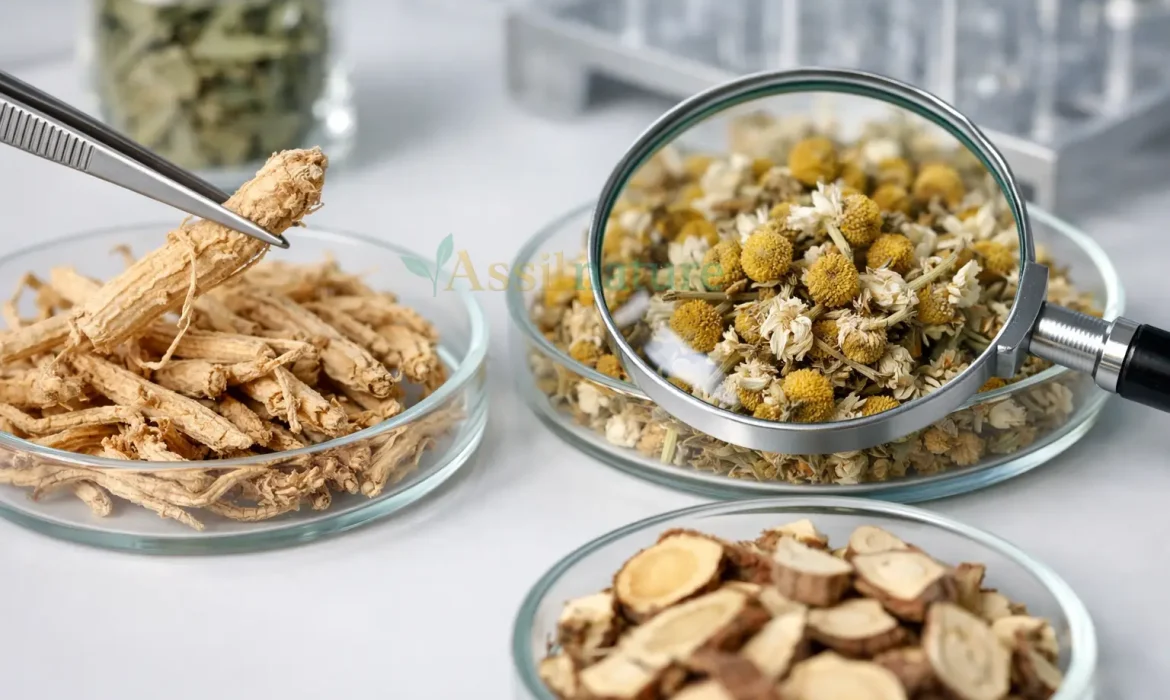
In the global medicinal herb trade, quality is not defined by appearance or origin alone. For laboratories, importers, and regulated industries, the true value of medicinal herbs lies in their verified identity, safety, and consistency. This is where laboratory evaluation becomes a central pillar of trust.
As international markets grow more regulated and competitive, laboratory testing of medicinal herbs has become essential for validating raw materials before they enter production or distribution. Laboratories play a critical role in ensuring that herbal ingredients meet quality specifications, comply with safety standards, and remain consistent across batches.
This article explains how laboratories evaluate medicinal herbs—from initial identification to safety screening and documentation—and how these scientific processes support informed sourcing decisions for buyers, manufacturers, and quality control teams worldwide.
These testing procedures are part of broader quality control in medicinal herb export, which ensures compliance across international supply chains.
The Role of Laboratories in Medicinal Herb Evaluation
Laboratories play a central role in transforming medicinal herbs from agricultural products into verified raw materials suitable for regulated markets. Their work bridges the gap between traditional plant sourcing and modern quality assurance requirements.
For buyers and manufacturers, laboratory evaluation provides objective data that supports safety, consistency, and compliance. Without this scientific verification, even high-quality herbs may face rejection or regulatory challenges in international trade.
Why Laboratory Analysis Is Essential
Visual inspection and supplier reputation alone are no longer sufficient to guarantee herbal quality. Laboratory analysis introduces measurable standards that confirm what a product truly contains—and what it does not.
Through analytical testing, laboratories verify botanical identity, assess purity, and detect potential contaminants. This process reduces uncertainty and protects buyers from risks related to adulteration, misidentification, or inconsistent quality.
As a result, laboratory analysis has become an essential requirement for companies operating in regulated sectors such as dietary supplements, pharmaceuticals, and cosmetic manufacturing.
From Raw Plant to Tested Ingredient
The laboratory evaluation process begins as soon as a herbal raw material is sampled. Once collected, the sample undergoes systematic preparation to ensure accurate and reproducible testing results.
Laboratories then apply standardized analytical methods to assess the herb’s identity, composition, and safety profile. These results transform a raw plant material into a documented ingredient that can be confidently integrated into formulations.
This structured approach ensures that medicinal herbs entering the supply chain meet defined quality criteria and remain suitable for long-term commercial use.
- Laboratory validation has become increasingly important as global buyers shift toward herbal and natural products
- Before laboratory evaluation begins, herbal quality is influenced by environmental conditions such as soil and climate.
These factors are explored in detail in our analysis of Moroccan climate for herbal potency.
Key Quality Parameters Laboratories Examine

When evaluating medicinal herbs, laboratories rely on a structured set of quality parameters to determine whether a raw material meets technical and regulatory requirements. These parameters help establish authenticity, usability, and consistency before an herb can be approved for further processing or commercial use.
Rather than focusing on a single factor, laboratories assess multiple characteristics that together provide a complete picture of herbal quality.
Botanical Identification & Authentication
One of the first and most critical steps in laboratory evaluation is botanical identification. This process confirms that the plant species and plant part match the declared raw material.
Accurate identification helps prevent substitution, accidental mixing, or intentional adulteration. Laboratories use standardized reference materials and analytical techniques to ensure that the herb being tested corresponds precisely to its scientific classification.
For buyers and manufacturers, proper authentication is essential to protect product integrity and ensure regulatory acceptance in international markets.
Physical Characteristics & Appearance
Laboratories also evaluate physical characteristics such as color, texture, particle size, and moisture content. These attributes provide important indicators of handling, drying quality, and overall material condition.
While physical appearance alone does not define quality, it helps laboratories identify irregularities that may signal improper processing or storage. Moisture levels, in particular, are closely monitored, as excessive moisture can affect stability and shelf life.
By documenting these physical parameters, laboratories establish baseline quality benchmarks that support consistency across batches.
Chemical & Bioactive Compound Analysis
Beyond visual and physical assessment, laboratories conduct chemical analysis to better understand the composition of medicinal herbs. This step focuses on identifying and monitoring key compounds that characterize the raw material and support quality consistency.
Chemical evaluation does not aim to promote therapeutic claims. Instead, it provides measurable data that helps laboratories, buyers, and manufacturers verify composition and ensure reproducibility across production cycles.
Active Compounds & Marker Profiles
Medicinal herbs naturally contain a complex mixture of chemical constituents. Laboratories analyze specific compounds or marker profiles that are commonly used to characterize a given plant material.
These markers serve as reference points rather than performance guarantees. By monitoring their presence and relative concentration, laboratories can confirm material identity and detect deviations from expected profiles.
This approach supports standardization efforts and allows buyers to compare batches objectively, even when natural variation occurs.
Consistency & Batch-to-Batch Reliability
Consistency is a critical requirement in commercial herbal supply chains. Laboratories evaluate batch-to-batch variation to ensure that each shipment meets predefined quality specifications.
Natural raw materials are inherently variable, influenced by factors such as climate, harvest timing, and processing methods. Laboratory analysis helps manage this variability by documenting acceptable ranges and identifying outliers.
For buyers, this consistency reduces formulation risk and supports long-term sourcing strategies based on predictable raw material performance.
Safety Testing & Contaminant Screening
Safety assessment is a fundamental part of laboratory evaluation for medicinal herbs. Regardless of origin or traditional use, raw plant materials must meet modern safety requirements before they can be accepted in regulated markets.
Laboratories conduct targeted screening to identify potential contaminants that may pose risks to consumers, manufacturers, or brand compliance.
Microbiological Testing
Microbiological testing evaluates the presence of microorganisms that can affect product safety and stability. Laboratories assess indicators related to hygiene, handling, and processing conditions throughout the supply chain.
This type of testing helps identify issues such as inadequate drying, improper storage, or contamination during handling. Results are compared against established acceptance limits to determine whether the material is suitable for further use.
For buyers, microbiological screening provides reassurance that the herbal material meets baseline safety expectations and can be integrated into controlled production environments.
Heavy Metals, Pesticides & Residues
In addition to microbiological risks, laboratories screen medicinal herbs for chemical contaminants such as heavy metals, pesticide residues, and other unwanted substances.
These contaminants may originate from soil conditions, agricultural inputs, or environmental exposure. Laboratory analysis ensures that detected levels remain within internationally accepted limits.
Such screening is particularly important for export markets, where regulatory authorities require documented proof of safety before approving herbal materials for import or commercial distribution.
Compliance with International Laboratory Standards
Laboratory evaluation of medicinal herbs is closely linked to compliance with internationally recognized standards. These standards provide a common framework that ensures testing methods, documentation, and reporting are consistent and reliable across markets.
For global buyers and manufacturers, compliance with laboratory standards reduces regulatory risk and supports smoother market entry in different regions.
Good Laboratory Practices (GLP)
Good Laboratory Practices (GLP) define a set of principles that govern how laboratory studies are planned, conducted, monitored, and documented. Their purpose is to ensure data integrity, accuracy, and reproducibility.
When laboratories follow GLP principles, test results become more credible and easier to accept by regulatory authorities and commercial partners. This consistency is especially important when medicinal herbs are supplied to highly regulated sectors.
GLP-compliant testing provides buyers with confidence that analytical results are not only accurate but also traceable and defensible.
Documentation, Traceability & Reporting
Beyond testing itself, laboratories generate detailed documentation that supports transparency and traceability. Reports typically include sample identification, testing methods, results, and quality observations.
This documentation allows buyers to verify compliance, assess supplier reliability, and respond efficiently to regulatory or audit requests. Clear reporting also facilitates communication between laboratories, suppliers, and quality teams.
In international trade, well-structured laboratory documentation often becomes a deciding factor in supplier approval and long-term partnership development.
How Buyers Use Laboratory Results in Sourcing Decisions
For global buyers, laboratory results are not merely technical documents—they are strategic tools used to evaluate suppliers, manage risk, and support long-term sourcing decisions. Laboratory data provides objective criteria that go beyond price or availability.
By relying on verified test results, buyers can make informed decisions that protect product integrity and ensure compliance with market requirements.
To explore how laboratory-tested quality connects with origin, climate, and sourcing practices, visit our complete guide to Moroccan medicinal herbs for global buyers.
Supplier Qualification & Risk Reduction
Laboratory reports play a key role in supplier qualification processes. Buyers use analytical data to assess whether a supplier consistently meets defined quality and safety standards.
Suppliers who provide clear, reliable laboratory results are perceived as lower risk. In contrast, incomplete or inconsistent testing raises concerns about quality control, traceability, and regulatory exposure.
This evaluation helps buyers reduce the likelihood of recalls, regulatory delays, or reputational damage linked to substandard raw materials.
Long-Term Supply Consistency
Beyond initial approval, laboratory testing supports long-term supply consistency. Buyers often compare historical test results across multiple batches to identify trends and ensure stability over time.
Consistent laboratory performance strengthens supplier relationships by building trust and predictability. It also allows buyers to plan production schedules and formulations with greater confidence.
In this way, laboratory evaluation becomes an ongoing partnership tool rather than a one-time verification step.
Science as the Foundation of Trust
In global medicinal herb sourcing, trust is built on verifiable data rather than assumptions or tradition alone. Laboratory evaluation provides the scientific foundation that allows buyers, manufacturers, and regulators to assess herbal raw materials with confidence.
Through systematic identification, safety screening, chemical analysis, and standardized reporting, laboratories transform natural plant materials into documented, compliance-ready ingredients. This process reduces uncertainty, supports regulatory acceptance, and strengthens quality assurance across the supply chain.
As international markets continue to demand higher transparency and consistency, laboratory evaluation will remain a central pillar of responsible herbal sourcing. Buyers who prioritize scientifically validated materials are better positioned to build reliable supply chains and long-term partnerships based on trust and accountability.
Frequently Asked Questions
Why is laboratory testing essential for medicinal herbs?
Laboratory testing is essential because it verifies the identity, safety, and consistency of medicinal herbs. It provides objective data that supports regulatory compliance and reduces sourcing risks for buyers and manufacturers.
What do laboratories check when evaluating medicinal herbs?
Laboratories examine multiple parameters, including botanical identification, physical characteristics, chemical composition, safety screening, and compliance with international quality standards.
How do laboratories ensure the authenticity of herbal raw materials?
Authenticity is ensured through botanical identification and analytical methods that confirm plant species and prevent substitution, misidentification, or adulteration.
What types of safety tests are performed on medicinal herbs?
Safety testing typically includes microbiological screening and analysis for contaminants such as heavy metals, pesticide residues, and other unwanted substances within accepted limits.
How do laboratory results influence sourcing decisions?
Buyers use laboratory results to qualify suppliers, assess risk, and ensure long-term consistency. Reliable test data supports informed decisions and strengthens supplier partnerships.
Are laboratory standards important for international trade?
Yes. Compliance with recognized laboratory standards ensures data credibility, facilitates regulatory approval, and supports smooth entry into international markets.
Related Posts
How Sun Exposure Affects Essential Oil Concentration (Industrial Guide)
In industrial botanical sourcing, essential oil concentration is not a “nice-to-know” it’s a measurable factor that can affect extraction...
Moroccan Medicinal Herbs in Global Trade
The global trade of medicinal herbs has expanded significantly as international buyers seek reliable natural ingredients with consistent...
How to Choose the Right Moroccan Herbal Supplier for Global Trade
Choosing the right Moroccan herbal supplier is a critical decision for global buyers operating in regulated and competitive markets. Supplier...