 Mon - Fri: 9:00 - 19:00 GTM
Quality Control in Medicinal Herb Export
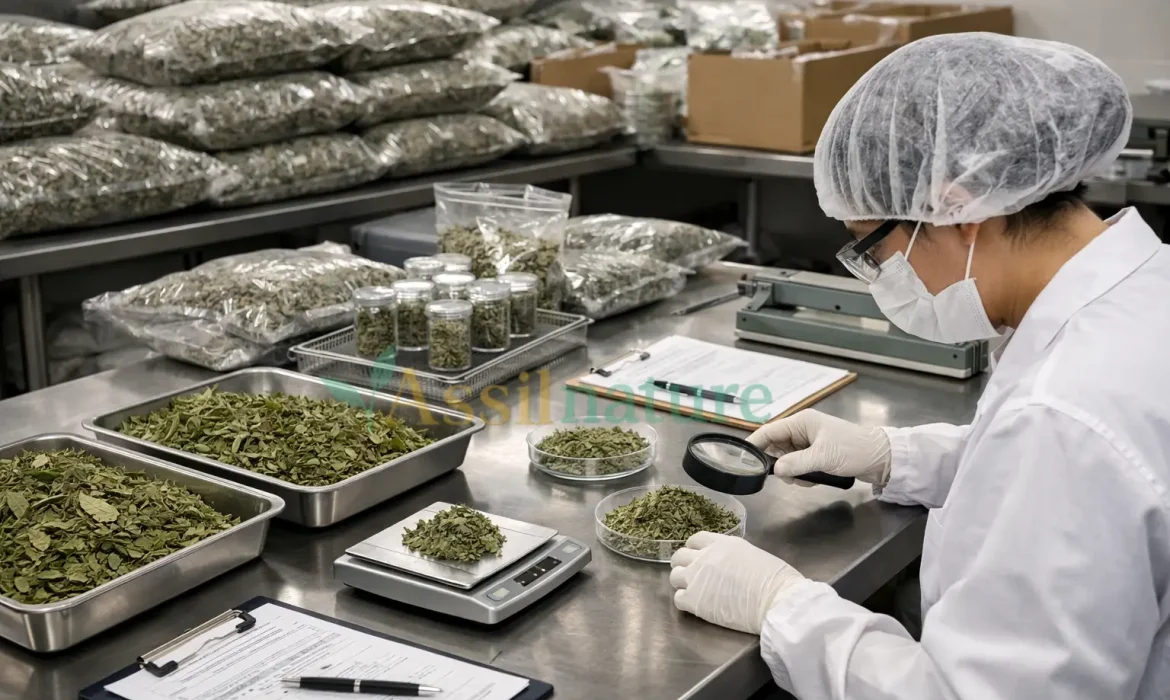
Quality control plays a central role in the export of medicinal herbs, especially as global buyers demand higher levels of safety, consistency, and regulatory compliance. In international trade, quality is not defined by appearance alone, but by measurable standards that ensure herbs meet laboratory, storage, and end-use requirements.
For exporters and suppliers, effective quality control systems reduce risk, protect market access, and build long-term trust with buyers. For importers, quality control provides assurance that herbal raw materials will perform reliably in further processing, formulation, or retail distribution.
This article explores how quality control is applied in medicinal herb export, the key risks it addresses, and the systems buyers rely on when evaluating suppliers in global herbal supply chains.
Why Quality Control Is Critical in Global Herbal Trade
Medicinal herbs are highly sensitive agricultural products. Their quality can be affected at multiple stages, from cultivation and harvest to drying, storage, and transport. Without structured quality control, variability and contamination risks increase significantly.
In global trade, quality control serves as a protective framework that ensures herbal materials remain safe, stable, and compliant as they move across borders. This is particularly important for markets with strict regulatory oversight, where failure tmeet standards can result in shipment rejection or long-term supplier exclusion. For buyers, quality control is not a formality but a decision-making tool.
Suppliers that demonstrate clear quality control procedures are viewed as lower-risk partners, capable of delivering consistent products at scale. As demand for medicinal herbs continues to grow, quality control has become a defining factor in competitive export success.
Key Quality Risks in Medicinal Herb Export
Quality risks are inherent in the export of medicinal herbs due to their natural variability and sensitivity to handling conditions. Identifying and controlling these risks is a core objective of any effective quality control system. Global buyers assess quality risks not only to protect consumer safety, but also to ensure regulatory compliance and long-term supply reliability. The following risk areas are among the most critical in herbal export operations.
Contamination and Microbial Risks
Medicinal herbs are vulnerable to contamination from environmental, biological, and handling-related sources. Microbial contamination, including bacteria, molds, and yeasts, can occur if harvesting, drying, or storage conditions are not properly
controlled.
Contaminants may originate from soil contact, water exposure, poor hygiene practices, or inadequate storage facilities. Without preventive quality measures, these risks can compromise product safety and lead to laboratory non-compliance.
Buyers prioritize suppliers who implement contamination control protocols, including clean handling environments and routine testing, to minimize these risks before export.
Moisture Levels, Stability, and Shelf Life
Moisture content is one of the most decisive quality parameters in medicinal herb export. Excess moisture increases the risk of microbial growth, chemical degradation, and reduced shelf stability during storage and transport.
Inconsistent moisture levels can result from improper drying or exposure to humidity after processing. These issues often become apparent during laboratory evaluation or after shipment arrival, creating costly quality disputes.
Effective quality control systems closely monitor moisture levels to ensure herbs remain stable and export-ready throughout the supply chain.
Variability in Active Compounds
Medicinal herbs naturally vary in their chemical composition, but uncontrolled processing can amplify this variability. Inconsistent levels of active compounds may affect product performance and suitability for downstream applications.
Factors such as uneven drying, prolonged storage, or exposure to excessive heat can alter chemical profiles. As a result, buyers often rely on laboratory data to verify that herbal materials meet defined quality specifications.
Suppliers that manage these variables through standardized processes are better positioned to deliver consistent quality across export shipments.
Laboratory Testing as a Core Quality Control Tool
Laboratory testing is a fundamental component of quality control in medicinal herb export. While visual inspection and handling practices provide initial indicators, laboratory analysis delivers objective data that confirms safety, stability, and regulatory compliance.
For global buyers, laboratory results reduce uncertainty and support informed sourcing decisions. Testing verifies that herbal materials meet predefined specifications before entering international markets.
Modern quality control systems integrate laboratory testing at multiple stages of the export process, ensuring consistent quality from origin to destination.
What Laboratories Evaluate in Medicinal Herbs
Laboratories assess a range of quality parameters, including microbial limits, moisture content, and chemical consistency. These analyses help identify contamination risks and detect quality deviations that may not be visible during physical inspection.
To understand the scope of these evaluations in detail, buyers often review laboratory evaluation of medicinal herbs, which explains how scientific testing supports quality assurance in herbal trade.
Laboratory Results and Export Compliance
Laboratory documentation plays a critical role in export compliance. Many destination markets require test reports that confirm herbs meet safety thresholds and quality standards prior to shipment clearance.
Incomplete or inconsistent laboratory data can delay shipments, trigger inspections, or result in rejection at port of entry. For this reason, buyers favor suppliers who maintain reliable laboratory partnerships and standardized testing protocols.
By integrating laboratory testing into quality control systems, exporters strengthen buyer confidence and reduce regulatory risk in medicinal herb export operations.

Post-Harvest Handling and Its Impact on Export Quality
Post-harvest handling represents one of the most sensitive phases in medicinal herb export. After harvesting, herbs are exposed to environmental and handling related factors that can significantly influence quality before they reach international markets.
Quality control systems focus heavily on this stage, as improper post-harvest handling can undermine otherwise high-quality raw materials and introduce risks that are difficult to correct later in the supply chain.
The Role of Drying in Post-Harvest Quality Control
Drying is a critical post-harvest process that directly affects moisture control, stability, and shelf life. Inadequate drying conditions can lead to microbial growth, chemical degradation, and inconsistent laboratory results.
Buyers and quality managers increasingly evaluate drying practices as part of supplier qualification. To better understand this relationship, many refer to detailed analyses of drying methods affecting medicinal herb quality, which explain how drying influences laboratory outcomes and export readiness.
Storage, Packaging, and Transport Considerations
Beyond drying, storage and packaging conditions play a vital role in preserving herbal quality during export. Exposure to humidity, poor ventilation, or unsuitable packaging materials can compromise stability and lead to quality deterioration.
Quality control systems address these risks by defining storage parameters, selecting appropriate packaging solutions, and monitoring conditions throughout transport. These measures help ensure that medicinal herbs arrive at destination markets in compliance with buyer expectations and regulatory standards.
Documentation and Traceability Requirements for Export
In medicinal herb export, documentation and traceability are essential components of quality control. Beyond product quality itself, buyers and regulatory authorities require clear records that demonstrate how herbal materials were sourced, processed, and tested.
Well-structured documentation systems support transparency, reduce compliance risk, and enable faster resolution of inspections or audits in international trade.
Export Documentation and Quality Records
Export documentation typically includes laboratory reports, batch identification records, processing descriptions, and shipping details. These documents help confirm that medicinal herbs meet agreed quality and safety specifications.
For buyers, access to consistent and verifiable quality records strengthens confidence in the supplier’s control systems. Incomplete or unclear documentation, on the other hand, may raise concerns regardless of the physical quality of the product.
Traceability Across the Supply Chain
Traceability allows exporters and buyers to track medicinal herbs from origin through processing and export. This capability is particularly important in the event of quality deviations, regulatory inquiries, or recall scenarios.
Effective traceability systems link batches to specific harvests, processing steps,
and laboratory results. By maintaining this continuity, suppliers demonstrate accountability and readiness for international compliance requirements.
For global buyers, traceability is not merely a regulatory formality—it is a key indicator of professional supply chain management and long-term reliability.
To place quality control within a broader export context, explore our complete guide to Moroccan medicinal herbs, which explains how origin, processing, and compliance shape global herbal trade.
How Buyers Evaluate Supplier Quality Control Systems
For global buyers, quality control systems are a key indicator of supplier reliability. Beyond individual test results, buyers assess how quality is managed systematically across sourcing, processing, and export operations.
Suppliers with structured quality control frameworks are viewed as lower-risk partners, capable of delivering consistent products that meet regulatory and commercial expectations over time.
Consistency, Transparency, and Risk Management
Buyers evaluate consistency by reviewing historical performance, batch records, and laboratory results across multiple shipments. Reproducible quality outcomes indicate that processes are controlled rather than dependent on chance.
Transparency is equally important. Suppliers who openly share quality documentation, processing methods, and test data demonstrate accountability and professionalism. This transparency reduces uncertainty and supports long-term sourcing relationships.
From a risk management perspective, buyers favor suppliers who proactively identify and mitigate quality risks rather than reacting to problems after shipment.
Long-Term Partnerships and Market Access
Quality control systems directly influence a supplier’s ability to access and retain international markets. Consistent compliance with quality standards reduces the likelihood of shipment delays, rejections, or regulatory sanctions.
For buyers, partnering with quality driven suppliers simplifies procurement and supports scalable growth. Over time, strong quality control practices become a competitive advantage rather than a cost.
As a result, quality control is often the foundation upon which long term buyer–supplier relationships are built in medicinal herb export.
Quality Control as a Foundation for Export Trust
Quality control is the cornerstone of successful medicinal herb export. In global markets where safety, consistency, and compliance are non-negotiable, structured quality control systems provide the assurance buyers require before entering long-term sourcing relationships.
By addressing risks related to contamination, moisture stability, processing, and documentation, quality control protects both suppliers and importers from regulatory and commercial uncertainty. It transforms herbal raw materials into export-ready products that meet international expectations.
As demand for medicinal herbs continues to expand worldwide, exporters who prioritize quality control are better positioned to access regulated markets, maintain buyer confidence, and build sustainable, trust-based supply chains.
Frequently Asked Questions
Why is quality control essential in medicinal herb export?
Quality control ensures medicinal herbs meet safety, consistency, and regulatory requirements before entering international markets. It reduces sourcing risk and supports long-term buyer trust.
What are the main quality risks in medicinal herb export?
Key risks include contamination, improper moisture levels, inconsistent chemical profiles, and incomplete documentation that may lead to shipment rejection.
How does laboratory testing support export quality control?
Laboratory testing verifies safety parameters, moisture stability, and consistency, providing objective data required for regulatory compliance and buyer approval.
Why is post-harvest handling important for export quality?
Post-harvest handling, especially drying and storage, directly affects stability, laboratory outcomes, and shelf life during international transport.
How do buyers evaluate supplier quality control systems?
Buyers assess consistency, documentation, transparency, and historical performance to determine supplier reliability and long-term sourcing potential.
Related Posts
How Sun Exposure Affects Essential Oil Concentration (Industrial Guide)
In industrial botanical sourcing, essential oil concentration is not a “nice-to-know” it’s a measurable factor that can affect extraction...
Moroccan Medicinal Herbs in Global Trade
The global trade of medicinal herbs has expanded significantly as international buyers seek reliable natural ingredients with consistent...
How to Choose the Right Moroccan Herbal Supplier for Global Trade
Choosing the right Moroccan herbal supplier is a critical decision for global buyers operating in regulated and competitive markets. Supplier...